Saturday, April 10, 2010

Hollow scooping -- business lessons from ice cream

I was buying my daughter a single scoop of ice cream at an ice cream shop the other day and I had to tell the lady scooping the ice cream not to "hollow scoop". For those of you that do not know what hollow scooping is, it involves creating a nearly perfectly round ball of ice cream with a hollow space in the middle -- effectively you wind up with a very beautiful scoop that lack a good portion of the substance it would have had it been a compacted scoop.

When I was growing up, there were basically 2 choices for ice cream: Thrifty ice cream at $0.25 per scoop or the higher-end Baskin Robbins or Double Rainbow at around $1.50-$2.00 per scoop. Thrifty used a funky scoop that was cylinder-shaped and nearly always guaranteed that you would get less than a full scoop and it was put into a flimsy cup or a really cheap cone that resembled wet cardboard as soon as the ice cream started to melt; usually there were only 3 or 4 flavors available -- it was cheap ice cream, but it was $0.25 and you knew what you were getting for what you spent. Baskin Robbins and Double Rainbow, on the other hand, had numerous flavors to choose from (at least 31) and the scoops were put into nice cups with lids or you had a choice of cones that tended to not turn to mush in your hand. The promise from Baskin Robbins and Double Rainbow was that you were getting a better product, more choices, and a better experience -- hollow scooping killed it.

It's hard to believe, but I remember the first time I was told about hollow scooping. I was pretty young and my cousins had taken me to a Baskin Robbins by their house -- they wanted me to try bubble gum ice cream with real gumballs in it (strange what you remember, right?). When the guy was scooping the ice cream, my cousin yelled across the counter to him and told him not to hollow scoop; the guy was a friend of my cousin from high school and they knew each other. Curious, I of course asked about, and the guy behind the counter proceeded to make the most beautifully round ball of ice cream that I had ever seen that was easily twice as big as any scoop I had every been given. He handed the cup across the counter to me, handed me a spoon, and told me to dig in, so I pushed the spoon into . . . nothing. There was a space at least the size of a tennis ball inside the scoop and the whole thing collapsed in on itself when I applied pressure. At the time, I was convinced this was the coolest thing ever and used to tell other people behind the counter not to hollow scoop my ice cream while growing up.

There's a not-so-new style of ice cream now that involves using a cold stone -- they can't hollow scoop because they have to mix up the chunk of ice cream that they pull out for you with the toppings that you want in front of you on that, well, cold stone. There's full transparency in the process and an even higher premium in the price.

So let's look at it:
  • Thrifty -- low cost, low experience proposition, low expectations
  • Cold stone ice cream -- high cost, high experience proposition, high transparency
  • Baskin Robins, Double Rainbow -- relative high cost, high experience proposition, hollow scooping
People don't like doing business with hollow scoopers and they're unfortunately common -- it feels dirty, like a trick has been played on you. Once you've been burned by a hollow scooper, you're likely to go for the known, lower cost and lower value option or the higher cost and higher transparency option.

PS -- if you serve ice cream, I hope you learned a lot from this article and I hope that nothing that you learned had to do with hollow scooping techniques.

PPS -- if you don't serve ice cream and you've been hollow scooping with your goods or services, I hope you stop TODAY because it's never been easier for your customers to cry foul and they have big megaphones, or at least just start charging the $0.25 that it's worth.

Photo lifted from Sweet Strain

Tuesday, April 06, 2010

Why the iPad will eventually make Amazon a software company


I wrote yesterday that the iPad is the best Kindle yet -- you sent me some e-mails about that, so let me expand.

The iPad runs a Kindle application that is easily as functional as my Kindle 2 though not quite as fancy as the iBook app. However, the iPad features a backlit, easy-to-read IPS screen that seems at least as easy on the eyes as electronic ink and requires not external lighting source. In addition, the color qualities of the IPS screen make the browsing experience much better -- looking a book covers in grayscale electronic ink seems prehistoric when compared to the full color of the iPad screen.

Although I elected to purchase the iPad without the 3G, the Whispernet over wifi flies -- there is no wifi option for the Kindle, so you are stuck with Sprint coverage and Sprint speed if you want data connection to your Kindle. The 3G version of the iPad works worldwide and, although there is a worldwide Kindle version available, those of us that purchased the original Kindle 2 are limited to using it within the United States. I will say, however, that it was nice to be able to pop on to the Kindle 3G and purchase a book in an airplane (before they closed the door, of course) if I happened to run out of books on a trip -- wifi only will cause me to have to make sure that I download what I need over the airport wifi before I board (or start flying an airline that has in-flight wifi).

One of the major differences between the Kindle 2 and the iPad is the physical size and I have to admit that I have not yet tried using the iPad in all of the places where I use my Kindle 2. The Kindle 2 is very much the size of a regular hardback book (much thinner, of course), while the iPad is more towards the magazine side of things. However, I did have the chance to compare the iPad to the Kindle DX and it seems equally as manageable from a size perspective -- of course, the iPad has no need for the fixed keyboard that the DX has, so the iPad feels like it has more screen real estate.

On to the title of my post: I honestly believe that Amazon should/will become a software purveyor instead of a hardware purveyor. At the time that Amazon wanted to push the e-book market hard, there simply was a vacuum as it related to hardware/readers, so they created one -- the hardware drove the core business sales, which were the books. Since releasing the Kindle 2, Amazon has churned out Kindle reader software for Windows, OS X, the iPhone/iPod Touch, and BlackBerry, effectively dissociating the Kindle branding from the hardware and associating with e-book consumption via multiple hardware platforms.

Operating under the assumption that Apple will continue to drive the price of the iPad down as they release future versions (did $99 seem too cheap for an iPhone when it was first released?), it may become too costly for Amazon to compete with Apple, and the big question is whether they really want to. One strategy, probably an attractive one, would be for Amazon to release one more hardware revision of the Kindle as a bridge between the price of entry for the iPad and the current price of the Kindle. Ultimately, Amazon could focus on continually refining software and expanding the platforms that they use as conduits to sell books and magazines, and get out of the manufacturing business.

It is important to note that Amazon has an awful lot of software offerings already such as EC2 (elastic compute cloud, which allows you to use its servers to create virtual servers) and S3 (simple storage solution, which allows you to pay pennies on the GB to store files on its servers) -- you can find a full list here. For those of you that might question the software strategy, it is important to understand that software is already a part of the strategy, not something new; manufacturing/product design was the real departure.

Here's to hoping Apple continues to allow the Kindle app on the iPad.

Monday, April 05, 2010

(the inevitable) iPad Review

I received my iPad (though not my iPad case, which is still in delivery) on Saturday afternoon -- no standing in line with all the rest of the folks. As with most Apple products, it came 99% charged, making it somewhat usable directly out of the box, except that I had to connect it to my computer to complete the activation/registration process (i.e., you can't just turn it on, it gives you that little connect to iTunes graphic).

Once I had completed the registration, I configured it for manual sync, moved everything over and started get errors. Lots of errors. All of which were generated by the applications. Not good. Apple's online help suggested a number of things, including deleting the applications from the computer and re-downloading and deleting them from the iPad and downloading them over wifi -- didn't feel like doing either of those.

In order to start with the simplest solution first, I unplugged the iPad, plugged it back in, and wound up at the registration process again. I had thought that the whole thing got nuked, but all of the music I put on was still there and the applications just re-installed.

Once I had it up and running correctly, I was pretty impressed -- the screen is gorgeous, the speed over my wifi is quick, and the processor seems to render things quite quickly. First app I launched was the Kindle App because I wanted to know if I could lose a device and charger out of my bag -- Kindle displays beautifully on the iPad, works great, and allows me to access my sizable Amazon investment, which is great (so, someone downstream in the family is going to wind up with a new Kindle). After verifying the Kindle app, I played around with the music and must say that the speakers have decent sound and good volume range; I also played around with the microphone and it seems to work pretty well. As I tweeted about before, Sketchnotes is going to be (for now) my go-to note-taking application -- being able to take regular notes and scribble drawings and notes with my finger is perfect for me.

Let me also note that I have had this thing running since Saturday around 2PM MST with the wifi on and the battery's only at 90% -- battery endurance is pretty amazing and I hope that the next gen iPhone learns some battery lessons from its bigger sibling. Some have complained about the lack of a camera on the iPad, but I have to be honest that trying to take a picture with this thing would be like mounting a camera on an awkwardly-shaped dinner plate and trying to take a nice still photo; I would agree that it probably would have done well with a front-facing camera in the bezel for video conferencing, but that probably would have driven the cost up higher than the price points that would have wanted to sell at for generation 1.

The shape of the iPad is quite awkward to hold and I look forward to receiving the case. While the screen is much easier to read on (and backlit) than the Kindle 2, the Kindle 2 is much easier to hold in your hand -- my hope is that the case will fix that issue. It almost seems as though there should be a stylus that you can use for drawing on the screen because of the size of the screen real estate -- I went ahead and ordered a Pogo stylus just to see how it works with the iPad (seemed like it was overkill for an iPod Touch or iPhone screen).

One of the disappointing things about the applications on the iPad is that the ones that are not made for it (or have not been upgraded to use all the screen real estate) are not fun to use; the iPhone apps don't scale up very well in the 2X mode and are just awkward to use in the normal iPhone screen size in the middle of the iPad. One of the interesting experiences was deciding which apps I would actually use on the iPad vs. the apps that were really only useful on the iPhone -- when it came down to it, I did not install all of the apps that are on my iPhone on the iPad.

Overall I'm happy with the iPad and will be even happier when the case arrives.

Thursday, April 01, 2010

The iPad wifi vs. the iPad 3G

Conversation I had with someone today:
Me: Have you ordered your iPad yet?

Him: No, I've read the reviews and they say I should hold out for the 3G version.

Me: Ok, but where are you going to use it where you don't have wifi?

Him: Hadn't really thought about it that way.

Me: Because the only thing you're paying the extra money for is the antenna and SIM receiver; it's not like the 3G version has a camera or some other cool feature.
Here's my opinion: $200ish for the 3G isn't worth it. You're not going to be able to upgrade the chipset via software when AT&T rolls out LTE to activate its 4G coverage. You can create a wifi hotspot with your phone to leverage the 3G/4G you're already paying for -- jailbreak your iPhone and use Mywi or use Proxoid on your Andriod phone. If you want to or are already paying for another data card, look into a Mifi 2200 from Verizon, a Mifi from Sprint, or even a PHS300 from Cradlepoint (just plug in your USB dongle from any provider and it autoconfigures and runs on batteries).

Just my opinion and something to think about.

Tuesday, March 30, 2010

The iPhone rumor cycle

Since the release of the first version, the iPhone rumor cycle has started every year in April. Current rumors for the next version that will likely be released in June with my comments:
  • Verizon version late 2010 -- maybe. I'm not sure that anyone is privy to whether or not AT&T has lost exclusivity except for Apple, Verizon, and AT&T; bear in mind that the iPad only runs in 3G on GSM (not Verizon), but that may just be a play to make it world-friendly. Ultimately if the iPhone does come out on Verizon, the folks that jump may be customers that AT&T ultimately does not want and it will be interesting to see if Verizon's network can handle the increased data volume.
  • Front-facing camera -- seems unlikely. I certainly haven't experienced tremendous speed increases in AT&T's 3G network that would lead me to believe that this would be a useful feature in a non-wifi environment, but maybe they'll only let video chat work over wifi.
  • Higher resolution screen -- probably so.
  • A4 (Apple) processor -- very likely.
  • Multi-tasking -- maybe. I'm guessing that if it happens, this is not going to be a free-for-all, but will have some sort of maximum number of concurrent applications that can run, priority for memory, etc. Bear in mind that we've gone through 3ish generations of the product without this happening and all of us seem to be able to function.
  • 802.11n support -- probably, but there may be some very real battery endurance concerns.
  • 4G network support -- maybe in the chipset, but I would be surprised to see it turned on for the initial release.
  • New graphics chip -- very likely.
  • New display -- very likely; not sure if it will be some sort of LED or IPS like the iPad.
  • User-removable battery -- fat chance, why would they change now?
  • Higher resolution camera and flash -- there doesn't seem to be a good reason not to have this, but none of the previous version have had a flash.
From a competition perspective, Apple is going to have to release a lot of the options above to compete with the specs of phones like the Nexus One, which is now available in a version that works on AT&T's network and is available fully unlocked.

Expect the rumors to continue to build with supposedly leaked specifications, leaked parts pictures, etc. As usual, none of us will know for sure until Jobs makes the announcement touting the new features. One important item of note is that the landscape is much more hypercompetitive with AT&T and all of the other carriers on track to continue to pump out Android-based phones that will attempt to heavily compete in the space.

On the plus side of things, if you don't need whatever the fancy new features wind up being, you'll likely be able to get a 3G or 3Gs for next to nothing once the 4G starts being sold.

Friday, March 26, 2010

Reimagining the whiteboard

I started my professional career consulting, so I've always used whiteboards -- I don't develop software or primarily consult, but I've found that they are very useful in thought and idea development.

Unfortunately most whiteboards are expensive and heavy and have to be hung. Luckily there are people out there that are reimagining the whiteboard and the premise behind it, which are making them more accessible, cheaper, bigger, and scalable.


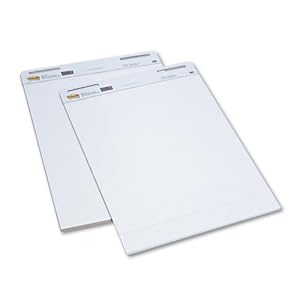
My favorite "portable whiteboard" consists of giant easel pad sticky notes like these from 3M. I like these because you can fold them up and take them away with you at the end of a session and the adhesive backing is strong enough to keep them up for multi-day sessions if you are using the same room. Of course, they're not really a whiteboard because you cant erase anything from them (unless you use one of those stupid novelty pencils).


If you want to turn a wall in a room or an entire room into a whiteboard, there is now paint that will let you do so, which is called IdeaPaint. Although I've yet to have a chance to actually use this stuff, it is supposed to create whiteboard surfaces with a single coat of paint, meaning that you can have as big or small a whiteboard as you want if you have a paintable surface. IdeaPaint is supposed to be more generally available this summer at places like Lowes and Home Depot; you can order it now in multiple colors to match your decor directly from the IdeaPaint site.


Another product that I just came across is called Whiteyboard (gotta love the name). As opposed to hard-installed, framed whiteboards, Whiteyboard sells a few different sizes of their frameless plastic boards that install using a non-damaging adhesive; their largest board, which is 4x6, weighs less than 2 pounds and costs $25. Think of Whiteyboard like a big sticker that you slap on the wall for an instant whiteboard surface and although it doesn't come in fashion colors like IdeaPaint, it goes right up with no special tools required.

Sunday, February 21, 2010

Discount travel's missed opportunity

It's not the sites themselves -- for the most past Hotwire, Priceline, etc. do a good job. However, it seems like a memo has gone out to every rental car agency and hotel that sells discounted cars and rooms to these sites to treat people booking via these sites like second-class citizens, which creates enormous badwill. There's a big missed opportunity here.

Let me give you an example: the cheapest rental car I could find for a recent trip of the type I wanted was $98.00 per day, but the price on Hotwire for the same class of car was $28.00 per day. What did I give up for the $28.00? Well, I gave up the convenience of going directly to my car off the bus, potentially getting a nicer vehicle via a free upgrade, and that's about it. What did I get in return? A reminder from the check-in person not less than 3 times that I had rented via Hotwire, a warning that I would be charged $120 for the vehicle if I brought it back even 1 minute after the return time I punched into Hotwire when I rented it (tip: on Hotwire, make your return time the same time as your flight time to ensure this doesn't happen to you), 2 attempts to try and upgrade me to a "premium" vehicle, and a 5 minute lecture on why I should be accepting the insurance because, get this, Hotwire doesn't provide me any protection (I've never had a rental car company offer me any free protection in all of the years that I've been renting cars).

Here's another example: I rented a room from Hotels.com for $98.00 and on the website for the same hotel, rooms were going for $210.00. For this particular hotel chain I happen to have pretty high status, but the person at the desk unapologetically informed me that because I booked with Hotels.com, they would not recognize my status, I would not receive any points for the stay, and I would receive none of the amenities (normally consisting of a couple of bottles of water and a bag of pretzels) that I normally get in my room. The really interesting thing was that their computer system had obviously correlated between my Hotels.com reservation and my chain profile -- I know this because the aforementioned statements were made preemptively before I even asked.

The discount travel sites are not to blame for this behavior, the rental car companies and hotels are. After all, the rental car companies and hotels are the ones giving the inventory to the sites to sell -- goes back to that old saying: "If you don't want them to buy, then don't sell." Unfortunately, the rental car companies and hotel chains are not only allowing this behavior from their employees, but it really appears as though they are encouraging the behavior. However, the end result for someone like me is that when I go to choose a rental car company or hotel chain to affiliate myself with and/or give the majority of my business, I'm not going to choose one that treated me like a criminal for purchasing through a discount travel site.

Of course, the rental car companies and hotels could turn this around. They could view each person that walks in the door as a potential lifetime customer of the brand and treat them as well as a loyal purchaser. Instead of being upset or encouraging their employees to be upset about a customer not booking directly, they could decide not to care what the purchase vector was and simply treat the customer like a customer. One key portion of this to ensure that customers, especially recurring customers, are booking directly would be to give them access to the same rates as the discount travel sites and/or be willing to match the price on the discount travel site (note: the only chain that I've known that will do this is Starwood, but you have to call the 800 number and tell them the price that a discount site is quoting -- in most cases they will match or get very close to the same price).

Remember when loyal customers used to be the most rewarded for their business by receiving the best pricing and service? There needs to be a shift back to these practices.

Saturday, February 13, 2010

The potential limitation of Verifone's PayWare Mobile

Verifone's PaywareMobile seems like a great idea. The first question that I had, of course, was whether it works on an iPod Touch. It doesn't. And there's a reason.

In finally getting to someone at a Verifone reseller, I was able to determine that the PayWare mobile application, which takes the data from the swipe unit and transmits it to Verifone actually initiates a call using the voice network -- no GSM chip, no cellular call, so no iPod Touch. Supposedly Verifone is working on a newer version that should be available in the next 6-12 months that uses either cellular or wifi data.

Here's the pricing reality:
  • iPhone at $99-$700, depending on which one you choose and the level of subsidy.
  • iPhone data plan at $30 per month (required for activation).
  • iPhone voice plan (needed for the application to work) of at least $20 per month.
  • PayWare sleeve is free (with a 2-year agreement)
  • PayWare software is free (from the iTunes App Store)
  • $19 per month fee (what I was quoted) per sleeve
  • $0.25 per transaction (what I was quoted)
Consider this instead:
  • iPod Touch at $199 to $499, depending on the one you choose.
  • WiFi data is free (assuming that you already have the infrastructure or can hop on free WiFi somewhere)
  • Various credit card apps on the iTunes App Store -- $0.99
  • Transaction fees -- vary by provider, volume, type of card, and whether or not the card number is typed in or swiped in (1.8%-3.8%)
I'm very interested to see other products, such as the Mophie Marketplace, that allow swipe integration into existing applications that support authorization over the data network instead of initiating a cellular voice network authorization.

This is going to be a war that is unlikely to be won by Verifone if they don't divorce themselves from voice authorization. Furthermore, they're really going to lose if they can't get this working over WiFi because they totally leave out the iPod Touch (and the iPad).

Wednesday, February 10, 2010

Scorched earth

The policy of scorched earth is an old military tactic that essentially involves destroying anything left in your path that might be useful to the enemy. In the past this was most easily accomplished by burning everything behind your army as you moved forward, hence the "scorched" part of the term.

It always astounds me the companies and individuals employ scorched earth policy when dealing with people that have been fired/let go or being fired or let go respectively. Perhaps it's because I work in entertainment and it seems like such a shallow pool that all of us in entertainment play in: you never know when someone that you employ scorched earth against may be in a position to do harm or good to your career in the future. (my sense is that many industries are just as tightly knit as entertainment, but entertainment is the vast majority of my experience).

In my time I have seen companies ruthlessly enforce non-compete agreements that are so restrictive former employees could not continue to work in the industry; this for people that they laid off, didn't even terminate for cause. Further, I have seen companies initiate lawsuits against former employees (even laid off ones) for violations of non-competes, knowing that they would not win, but wishing to be punitive and cause the employees significant out-of-pocket dollars to defend against them. Note that a number of times I have seen these employees wind up in decision-making positions and either actively or passively ensure that they company that employed scorched earth against them was unable to do business with them or any of their colleagues that were willing to listen.

On the employee side, I have certainly encountered ex-employees that have not had nice things to say about companies or people at companies; pretty normal response and forgivable. However, I have also seen ex-employees that have actively engaged in attempting to overtly disrupt company business operations. In almost every overt case that I have seen, the ex-employee may have been able to cause some short-term pain to the company, but has never succeeded in the long term. Further, I have seen ex-employees employing these tactics blackballed in the industry because word gets around quite quickly about character when an ex-employee attempts to employ scorched earth.

Sure, you can believe that business is war and take some learnings from that, but I do not recommend scorched earth as any sort of sustainable, long-term strategy for businesses or businesspeople.

Sunday, February 07, 2010

When life gives you lemons

You can be like MacGyver and use them for battery acid.

You can make lemonade.

You should watch this video just in case you get a lemon delivery.

Link

Monday, January 18, 2010

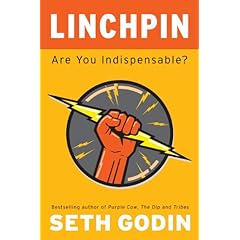
Book review: Linchpin by Seth Godin

FULL DISCLOSURE: I made a donation to the Acumen Fund to get an advance copy of this book.

FULLER DISCLOSURE: I would have donated twice as much to get it that much sooner because it's that powerful.

This is not a marketing book, though few of Seth's last books really felt that way.

This is a book about becoming indispensable, about becoming a linchpin. However, reading the book is not like reading the map; read the book and become a linchpin-in-training.

In thinking about it, especially because such a large portion of the book is dedicated to gifts, this books is really Godin's gift to anyone that is willing to read, to question themselves, to take the steps to become a linchpin-in-training. As I read through the book, constantly highlighting and dog earring pages, it became clear to me that Godin didn't have to share the information in the book -- he certainly didn't need to share everything in the book. Of course, had he left out any bit of information that he included, then he wouldn't have been practicing what he preached; he wouldn't have given away all of the knowledge that can help you succeed with no expectation of financial gain (sure, he'll make some money from the price of the book and maybe get some speaking engagements, but he could have provided so much less and still had the same outcomes, which makes the book itself a perfect example of the content of the book).

You might be surprised to hear that you'll learn a lot about yourself when reading this book, provided you can beat down the resistance that you may have to doing so. I'll admit that I raced through the book the first time I read it, underlining good quotes and points, but not really applying the knowledge to myself, not engaging the introspection that I should have. So I read it again. Because the resistance was to write a review quickly (which I could have) and not absorb and live the information -- I pushed against the resistance and did it the "hard" way, which ultimately was the more valuable way.

Ultimately this book is about helping you discover the artist that's already inside of you, to create art. As Godin defines it: "Art is a personal gift that changes the recipient. Art is a personal act of courage, something one human does that creates change in the other." This books makes you think about all the ways you can become great at creating art; linchpins, ultimately are artists.

If you're looking for the map on how to do all this stuff, how to be an artist, then, as Godin says: "Here's the truth that you have to wrestle with: the reason that art (writing, engaging, leading, all of it) is valuable is precisely why I can't tell you how to do it. If there were a map, there'd be no art, because art is the act of navigating without a map."

Linchpin will be available on January 26 and presumably will be available in a Kindle version (it will likely show up on Amazon's Kindle site the day of the release).

PS -- my ship date for this review was the end of the day today (January 18): review shipped on time (even though it's not necessarily perfect, I'm done thrashing it).

PPS -- if during reading (or even before reading) you want to give up (or not start), look on page 101 of the hardcopy version; don't be at the confluence.

Saturday, December 05, 2009

Apple buys Lala

It's been confirmed that Apple has purchased Lala and rumors are flying about why they did that. Lala stores music in the cloud and streams it to a user's computer (kind of reminds me, in a way, of what MP3.com was up to before they got sued); as part of the deal, Apple gets the not only the Lala engineers, but also the founder of the company.

This acquisition is not uncommon for Apple -- they buy a lot of small companies and really never disclose the purpose of the acquisition, though it usually becomes obvious 6-18 months later when the integrated technology gets released as a feature, component, etc. Why is Lala getting so much attention?

I don't mind storing my music locally. Broadband speeds to my house are at the point where it just doesn't take all that long for me to download a track or album from iTunes; storage is cheap and gets continually cheaper, so there's not much overhead in storing it. All of my music gets (and everything else on my computer, for that matter) gets backed up for around $4 per month. My music does not necessarily need to be available to me everywhere -- I've got all the music that I want to listen to on my iPhone (it's still got half of its storage empty) and even more music on my laptop (still 60gb free at last count); I'm not sure that I necessarily need to be able to stream music to my laptop and there are places I want music where there is not an internet connection.

But maybe I'm wrong.

The model of needing to own music is probably fundamentally flawed. Subscribing to music is likely going to need to be the model of the future. All of the platforms that I mentioned above -- my home computer, my laptop, my iPhone -- are all platforms that could receive a stream of music, especially as broadband gets more pervasive, and its probably worthwhile to note that all of my platforms carry that little Apple logo and all my current consumption is through iTunes. I've currently got over 30,000 individual songs in my collection, which is a lot, but will never hold a candle to the over 8 million songs currently available on Lala.

And what about the obscure music that Lala doesn't have? Well, they have their "Music Mover" utility for that. I'm not going to claim that I fully understand the technology behind it, but I'm going to guess that just as MP3.com's (pre-lawsuit) utility used to scan the zero track of a CD for identification information and would match against tracks already in their database to give you a 30 second virtual "upload", the Music Mover probably scans ID3 tags, compares them to music in the database, and gives you access to what is already on the Lala servers, actually uploading only what is not already there. Music Mover solves the problem of what to do my entire music collection that I've already got, which is probably my biggest hesitation of moving to an on-demand, streaming model.

Let's go back for a second to my statement about pervasive broadband because that infrastructure is what will ultimately be the reason that streaming succeeds (or fails). AT&T is the current data provider for iPhones in the United States and we've all seen the "map for that" Verizon ads that contrast high-speed data coverage between their networks. If you're like me, one of my big frustrations with satellite radio is when it doesn't work, which, even on Verizon's network, is still a possibility. With physical audio tracks existing on my laptop, iPhone, etc. it does not matter if the data network is reliable; my limiting factor is simply battery life. The big question/challenge for streaming right now is whether or not the technology is adaptable enough to deal with network outages without me knowing about it.

But then again, maybe Apple is simply after something more simplistic.

Maybe the Lala purchase is just to add additional value to an iTunes store purchase -- buy the track for $0.99 and you can download it, buy it for $1.19 without DRM, or buy it for $1.50 and you can download it and stream it as much as you want on the web.

That sounds pretty boring though.

Tuesday, December 01, 2009

Book review: It's Not Who You Know -- It's Who Knows You

FULL DISCLOSURE: I'm honored to say that I know the author, David Avrin, and that it is my pleasure to review his book. I purchased my review copy (i.e., no galley or comp copy for review) and I think that anyone that knows me, David included, knows that I'm always tougher on people that I know.

This book is about promotion. About tactics and techniques to leverage your brand, your company's brand, yourself to the top of people's minds. David Avrin, the author, says it best: "This book is an unapologetic homage to the power of using creative promotion to attract customers, build your business, and support your families." Ok, he said it better than me.

If you do not have a PR strategy for yourself or your business, this is likely the book for you. However, I will warn you that it is not a comprehensive, step-by-step, spoon-fed, detailed PR strategy guide; I'm sure there are other books for that. What you get with Avrin's book is an easily read, easily consumed strategic basis for a workable PR and marketing strategy.

Avrin covers topics that I found interesting such as representing yourself during air travel (I'm totally guilty of having gone the extremely casual comfort, stick my earphones in my ears immediately route), doing memorable things during conferences and tradeshows, and some interesting tactics for positioning yourself as an expert to the media (did you know that proactive could be a wrong strategy when dealing with the media?). Additionally, for those of you that are unfamiliar with effective web and social networking strategies for promoting yourself or your business and for tracking your web presence, you will find the information in Avrin's book extraordinarily useful.

The idea point breaks in Avrin's book are not big -- I like that. Many business authors feel as though they absolutely have to cram in as much supporting material as possible in between idea points, creating extremely long chapters and, while that is sometimes effective, depending on the subject matter, by keeping the breaks short and the ideas succinct, Avrin's book is easy to read, easy to skip around in, and very easy to use for future reference.

Be visible. That's a big, overriding point in the book and, indeed, why Avrin likely brands himself as "The Visibility Coach". Examples of this range from ideas as simple to producing a large banner to advertise the re-opening of a restaurant to ensuring that you're the one person that actually stands up and asks a question at the end of a presentation/speech when everyone else is sitting, staring at their feet. As Avrin says: "The greatest enemy of success in business is anonymity. Speak up . . . In a flat sea of competitors, it takes very little to stand out and be noticed. Stand out. Be noticed."

There are numerous real-world examples that Avrin ties in throughout the book, but not so many as to be overwhelming -- a few examples to drive the point home and then he moves on to the next point. For those of you that are fans of skipping to the ends of chapters or idea points in the hopes that there is a summary sentence or two, you will be happy to know that each idea point ends with a "The Visibility Coach says:" followed by a short idea point summary.

Thankfully all books are not equally (read the book for more on "All things being equal") and so I highly recommend this book to anyone interested in promoting themselves and their business.

Kindle version available.

Link -- Amazon

Link -- Kindle version

Link -- Visibility Coach main page

PS -- I went to buy some copies of this for some folks today at Barnes and Noble and have come to find that it is mostly sold out in Denver; it is the #1 business book this week in Denver.

PPS -- I'm a proud member of the Homecoming Project and have been for years without actually having a name for it; read the book and join the Project.

Monday, November 30, 2009

Texting while driving = ticket in CO starting tomorrow

The law that started in California finally arrives in Colorado starting tomorrow: it is a primary offense to be caught texting while driving, punishable by a $50 fine.

A few items of note:
  • You can also get a ticket for texting while sitting at a light.
  • "Texting" includes e-mail, Facebook, etc. -- anything that requires you to type on the keyboard.
  • "Primary offense" means that you can be pulled over for suspicion of texting; you do not have to have committed another violation.
  • This law does not include using a handsfree device to make voice calls (unlike California, but I'm sure that's coming too).
  • Unfortunately there does not appear to be a good voice-to-text application for the iPhone -- most require a carrier assignment and use the e-mail gateway; ShoutOUT looks promising, but does not yet appear to actually be available.
I watched a cop get interviewed about this on the news this morning and he admitted that it would be difficult in a compressed time period to tell if you were dialing a number vs. texting, but that if there were a reasonable time period in which he was following you, he would probably be able to tell.

Guess I'll actually have to start using the traditional phone function of my iPhone.

Thursday, November 26, 2009

Smartbook AG gets upset with people using the term "smartbook"

Apparently Smartbook AG has a multinational trademark on the word "smartbook" -- good for them. Although they are well justified in defending manufacturers against using the term for competing products, they have also apparently decided to go after media outlets and even some bloggers that are generically using the word to describe next generation devices under the moniker of "smartbooks".

Interesting marketing strategy.

Here's a link to the source about the smartbook controversy on TechCrunch.

Smartbook.

(yup, I'm happy to help)

Sunday, November 15, 2009

Refreshing interview with Tom DeLong from Blink182

A series of refreshing interviews with Tom DeLong from Blink182 -- I especially like the video embedded below. To whet your appetite, here's a quote from the interview: "I believe that if you look at your band with a modern filter, you can create really cool merchandise, live experiences, an amazing website and monetize all these elements and not worry about selling the record itself. In fact, I believe you should take down every barrier and put as much music out there for free."


(if the embedded video is not working, click here)

4-part video series here.

Transcription of the interview here.

Sunday, November 08, 2009

Wave invites follow-up

Ok, I got some hate mail from people that posted comments on my blog about the Google Wave invites, so here's my general response:
  1. I asked you to send me an e-mail in the original post. Not only does it make it easier for me to invite you, but it protects you from having to post your e-mail address in the comments, subjecting you to what would likely be an overwhelming amount of spam.
  2. For those of you that did elect to post a comment and left your e-mail address, I've rejected all comments so that your e-mail address will not appear where anyone or any spambot can find it.
  3. This really was designed as a thank-you to people that read my blog; if you had actually read the text of my post, you would have been able to follow the instructions and likely would have received an invitation from me.
Thanks again to my loyal readers.

Ross

Google Wave invites

I've got 5 Google Wave invites for my loyal blog readers -- just shoot me an e-mail if you want one and, as always, first come, first served.

UPDATE: I'm out for now 3:30PM MST on November 8, 2009. Here's the deal: if you send me an e-mail before I posted this update, I'll save your e-mail address and send you an e-mail when I receive another round. For those of you that posted comments or contacted me in a way other than an e-mail, I'm sorry that I wasn't able to help you.

Thanks for reading.

Wednesday, October 28, 2009

3 Google Voice Invites

If you need one, drop me an e-mail -- first come, first served until they're gone.