Sunday, April 19, 2009

The exectuive summer attire challenge

Here's the challenge: how can an executive of a company dress in shorts professionally for the summer? This needs to be a head-to-toe solution, including footwear. More specifically, the outfit needs to work when attending a meeting when everyone else is in pants and polos or button downs without anyone feeling uncomfortable and over- or under-dressed.

Here are some guidelines:
  • Loafers with tassels are not allowed. Sorry.
  • Dress-type sandals are not allowed, including fisherman-style sandals. If you can believe it can be pulled off with sandals, then it's the Reef flip flops with the bottle opener in the bottom.
  • Socks are optional, but remember the bullet above. I used to love wearing low Havana Joe oxfords with short socks and it worked, but you can't seem to find Havana Joes in America anymore.
  • The clothing and footwear that you suggest must be readily available in America and must be able to be purchased and viewed online (i.e., don't suggest the Havana Joe shoe solution unless you actually know where I can reliably get them in the US).
  • Don't just suggest an outfit made by Tommy Bahama. Unless you actually live in a beach community, silk shorts and a silk camp shirt are not inherently professional.
  • Don't just suggest an outfit put together by Banana Republic -- we're not going on a safari.
  • Don't suggest what the guys in Bermuda wear -- blue knee socks, linen shorts, and a blazer and tie are not the solution.
  • Functionality is encouraged. I prefer shorts that have either cargo pockets or at least an extra pocket that the iPhone can go into -- no dorking out the belt.
Some note to get you going in the right direction:
  • Long-sleeve shirts that can be left untucked are always a good solution -- I like linen or light cotton shirts in white.
  • The Territory Ahead always seems to be a good resource, but I don't think that it is the only source.
  • Short-sleeve shirts are important and polos are fine; if you suggest a polo, it must have buttons on the neck -- none of those silly polos that are like a v-neck with a collar.
  • Sports coats and/or jackets really aren't required -- feel free to suggest lightweight ones, but you'd have to have a pretty convincing argument as to why a jacket needs to be included.
Send me links and pictures and all that stuff -- let's see what we can come up with and I'll post what you send (provided it follows the guidelines).

I think it will be fun.

Picture by vessenes.
Friday, April 17, 2009

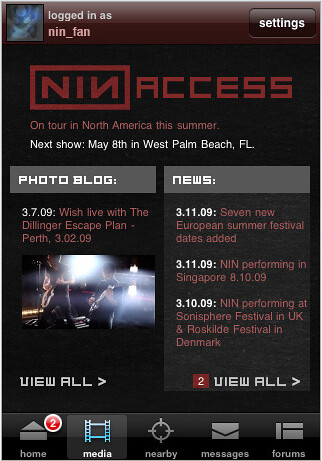
NIN iPhone app

This is important. Band/artist as brand as social network as mobile application.

As he's done before, Trent Reznor is showing the music business the way with the release of the (free) Nine Inch Nails (NIN) iPhone application. The application offers full integration with the NIN website, which is a thriving social network.

Sure, you might say that NIN has an extremely loyal fan base -- they do. You might say that NIN's fans are more pre-disposed to have an iPhone -- they are. Those are not good excuses.

The NIN brand just became the portal to something useful for the end user using the iPhone as a vector. Of course, this strategy is not limited to music artists and can be easily duplicated at very low marginal cost by any brand in the world. Why doesn't REI provide the application for my weather, snow reports, and tide tables? They sell all the stuff I want to use for the activities that are driven by those metrics. Why doesn't K2 provide me with an application that gives me ski run maps and allow me to plot my position with GPS? Every time I use the app, I'll associate the information with their brand and they can even send me messages about performance demos on the hill and/or sales at retailers in the village.

Specifically relating to music artists: NIN illustrates that artists can build a brand that fans are willing to opt into, to subscribe to. Reznor decided not to monetize the application, which is smart. Artists should monetize transparency and access and exclusive content; the media through which the fans reach those things that can be monetized should be free.

If I were a musician, I would simply copy everything that NIN and Reznor did. The incremental costs are very low (you could pull off a lot of the same stuff with free services like Ning) and he is highly successful.

Oh, and having your fans download a branded application to their phone is the ultimate in opt-in advertising.

Blink182's back in the studio

I like these guys as a band and personally (I spent a lot of time running operations at their shows at HOB amphitheatres around the country when they were touring -- one of their tour guys introduced me to Lolita's Taco Shop in San Diego), and I'm looking forward to their new album and seeing them back out on tour again. Probably too much to hope that they would jump out on some Van's Warped Tour dates, but there are rumors that Green Day is going out this fall and how cool would it be if it turned into a Green Day and Blink182 tour just like a few years ago?

Picture from Mark Hoppus' blog:

Thursday, April 16, 2009

My thoughts on the United obese passenger policy

My thoughts:
  • United is not the first airline to do this, though they probably should have been one of the first movers on this -- there is precedent.
  • This is not a revenue issue for United; there is a revenue component, but I think that they are responding to frequent travelers like me that are tired of it. Every time I complete a survey from United, I voice my opinion about this issue.
  • I bought my seat. The whole seat. And half of the arm rest on the seat next to me. Remember the invisible line in the back seat of the car? Don't cross over (or under) my invisible line.
  • Seat belt extender = automatic second seat purchase. I've never seen someone that needs the seat belt extender contain themselves within the defined area of a single seat.
  • United is not discriminating against you for your weight problem. If they're discriminating against you, then they are also discriminating against me by maintaining my weight in such a way that I can fit in the confines of my seat and allowing you to encroach on the area that I paid for.
  • If you hide behind blaming your weight issue on genetics or issues beyond your control, read The Body Fat Solution by Tom Venuto or save the cost of the book and realize that you will lose fat by expending more calories than you take in on a daily basis.
Sure, big rant on my part. But I spend a lot of money on airplane flights and a lot of time in airplane seats.

Link to the LA Times article

Picture from Matt's Flicks

Snoop Dogg on uStream.tv


Snoop Dogg has a channel on uStream.tv called "Snoop Dogg Live". At certain points throughout the course of a day, week, month (depends on Snoop's schedule, I guess), you can watch Snoop go through portions of his life.

What's interesting (and potentially disruptive) is that by using uStream.tv as the platform, Snoop has essentially become his own social network. By tearing down the wall that most performers of his calibre build up to shield themselves from the public and becoming transparent in his day-to-day life, he's attracted people to the uStream landing page. What's very interesting is that the uStream platform allows more interaction with comments, followers, and direct Twitter posts -- people are interacting with each other even when Snoop is not broadcasting live.

This is easily emulated and my guess is that we will see more of this with other celebrities and artists. The artists that are successful in the future are the ones that can get their fans to subscribe to them, and they will like be able to monetize the subscription; the price the artist pays is transparency and exclusivity for those that are willing to subscribe (and pay).

Note that Snoop participates on a lot of other social networks as well (Facebook, etc.) and also has his own community hosted on his site -- uStream is just a very interesting example of the power of artist transparency.

Link

Monday, April 13, 2009

How my social network update system works

There are 2 main content feeders:
No, I do not actually update my status on any other social network directly, it all feeds from the 2 sources above. You can subscribe to read my blog via RSS (you can also read my blog directly on the web) and you can choose to follow me directly on Twitter (you can also subscribe to a RSS feed of my Tweets, if you like). Here's where it gets interesting:
  • I use Twitterfeed to update my Twitter followers with my blog posts. Once a hour, Twitterfeed checks my blog RSS feed, finds new titles, and sends a Tweet on my behalf with the title of the post and a link to the post using SnipUrl. Basically if you follow me on Twitter, you get all of my tweets plus all of my blog posts as tweets.
  • Twitterfeed also updates my LinkedIn profile via Ping.fm because LinkedIn doesn't allow Twitter to directly update my status. Basically, if you are linked to me on LinkedIn, which I consider my professional social network, you get my blog posts as status updates, but none of my tweets.
  • The Facebook Twitter Application updates my status on Facebook with every tweet, so if you're a friend of mine of Facebook, you get all of my direct tweets plus all of my blog posts via Twitterfeed.
Just typing this out made me realize how totally confusing all of this is -- I think I'm going to look at boiling it down to just ping.fm and Twitterfeed: ping.fm can update everything (Facebook, LinkedIn, Twitter, etc.) and Twitterfeed can update ping.fm with all my blog posts.

Once I have it optimized, I'll let you know.

Friday, April 10, 2009

Why appraisals will be the problem for refis

I received a ton of responses to my tweet yesterday afternoon that said this: Obama wants refis - the new problem will be appraisals, mark my words. Allow me to explain this in more than 140 characters.

It started by me reading this article in WSJ in which Obama is pushing for refinancing, stating that people should refinance as rates are low and they could save into the thousands per month. I guess it actually started before reading that article as I'm in the processing of refinancing and have needed to go through multiple appraisers to get one that would actually recognize the true value of my home; the only reason I was able to find one is because a house around the corner from me sold at true market value in the last few days and it dragged the comps for the neighborhood up.

Here's the real issue: appraisers were a big part of the mortgage problem. I remember going through a number of purchases and refis where appraisers literally would ask for the amount the appraisal needed to be and would do "drive-by" appraisals without ever setting foot in the house. Now appraisers are under the gun from lenders and legislators and they are running scared. The guy that finally did my appraisal correctly took about 45 minutes during which time he measured the entire exterior of my house, measured the yard, measured every room, diagrammed the inside of the house, and shot digital pictures of all the improvements. As my friend in commercial real estate said, "Ross, he actually did a real appraisal."

The big problem that many homeowners will face as they go to refinance is that appraiser may not be willing to appraise their homes even for the original purchase amount. Imagine if you paid $200K for a house, put in $30K in improvements, needed the appraisal for your refi to be $200K at a minimum, and the appraiser put your home value at $195K, meaning that in order to get the low rate, you would have to bring $5K in principal to the table in order to secure your mortgage.

My mortgage broker told me that, at least in Colorado, they are looking at instituting a process where there is a centralized clearinghouse for appraisers: essentially the broker would call a single number and the clearinghouse randomly assigns an appraiser. In my case, had this been the process, I probably would not have been able to get a good appraisal, at least not until after the other house in my neighborhood had completed its sale.

I'm going to be very interested to see how this plays out because I think that although it is acknowledged that the mortgage origination process if much tougher, appraisals do not seem to have hit the radar yet . . . they will.

Picture from enignot

Thursday, April 09, 2009

That last post was the last of my book reviews for this week

Sorry, but I was trying to get caught up on the stack of books that I wanted to review; I've only got one left, but it's really good and I want to save it to review by itself next week. My apologies for blowing up your feed reader over the last 2 days with reviews, but I hope you find them worthwhile (you should see how many books I don't review).

Book Review: Personal Development for Smart People

FULL DISCLOSURE: I received a complimentary copy of this book for review.

I have to start off by apologizing to the author: I requested a copy of this book for review because I really like his blog and it migrated to the bottom of my review pile -- guess I forgot about the basic inventory rule of FIFO (First In First Out). All of that having been said, Steve Pavlina, the author, writes a great blog about personal development that I read daily (or as often as he posts) and has produced a great book.

Steve's got a great personal story that you can read about in the introduction of his book, but it boils down to him having a turning point in life when, after having been arrested for theft, he received community service instead of a stronger sentence. After acknowledging the turning point, Steve dedicated himself to starting a business and reading every personal development document that he could get his hands on, extracting knowledge that worked and discarding stuff that did not -- this book is a distillation of hundreds of books and documents on personal development.

The book itself is broken into 2 parts: (1) Fundamental Principles, and; (2) Practical Application. As expected based on the labels, the first part of the book introduces the underlying structure for personal development, and the second part of the book shows the application of the principles.

Being a long-time reader of his blog, I found the same writing style in the book to be very familiar: Steve writes in a very direct way and, although I've never spoken with him, my guess is that Steve is one of the few writers that writes exactly as he speaks. None of Steve's writing is esoteric and he favors succinct language to get his points across instead of flowery prose.

For those of you that have read personal development books in the past (I've certainly read a few), you will find this book dramatically different (I would call it "refreshingly different", though I'm sure there are those that would disagree). Bear in mind that this book is, as stated previously, a distillation of hundreds of works about personal development, so it is, by virtue of its approach, very different.

I'm not going to lie: there is some spiritual stuff in here that may not be appealing, but on the whole, the principles are useful and the practical application portion is very useful even if you don't necessarily subscribe to all the principles.

Definitely a worthwhile read.

Kindle version is available.

Link

Book Review: Ping

FULL DISCLOSURE: I received a complimentary copies of these books for review.

Did I just say "copies"? Yes, I did; well, sort of. I actually received a paperback that bound together 2 books:
  1. Ping: A Frog in Search of a New Pond
  2. The Way of Ping: Journey to the Great Ocean
Both of these books are parables about a frog named, unsurprisingly, Ping. In the first book, Ping decides to leave his home pond for a better life and encounter roadblocks that he must deal with along the way to reaching his goal. In order to deal with the roadblocks, Ping finds that his optimistic outlook and existing skill set are not enough and that he not only needs new skills, but needs to adjust his though process. Ping is back in the second book on another journey, but delves deeper into the change process by sharing his experiences and knowledge about his process with others.

Although I have read some better change management books, I do like the way the ideas are presented in the parable format; it has been my experience that you can get more engagement across an organization through parable-based business books that seem less intimidating. I will say that there are a large number of platitudes that are a little less than useful, but the books are a good and easily understood start on principles of risk-taking and change.

Unfortunately the copy that I reviewed with both books bound together does not seem to be available (it is stamped with "Two-in-one Advance Reading Copy", so that makes sense) on Amazon.

Neither book is available on the Kindle.

Link -- Ping

Link -- The Way of Ping

Why I put the availability of a Kindle version in my book reviews

You might not be like me. You might not have made the decision to purchase only books in electronic form from the day that you purchased your first Kindle. That's ok.

But here's my deal: I will continue to review books that are sent to my in hardback or paperback, but I feel that as a reviewer I should let you know whether or not you can consume the book electronically.

I'd want to know and I figure some of you might want to know.

PS for publishers, marketers, etc.: you will get a much faster review if you send me a Kindle-capable version of your book.

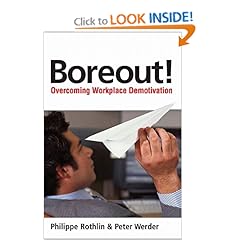
Book Review: Boreout! Overcoming Workplace Demotivation

FULL DISCLOSURE: I received a complimentary copy of this book for review.

I'll be honest: I've been slow in reviewing this book because it seemed, well, boring. All of us have had jobs throughout our career where we've been bored; I remember working in retail one summer in college and it was mind-numbing. However, most of us that have been successful figured out how to turn boring jobs into opportunities. The short story is that I didn't really think that there was much to learn from this book.

Here's what I failed to consider and what makes this book important: I've been in a position where I have had so much on my plate for so long that I can no longer relate to what the authors term as "boreout". More importantly, it's important, as a leader, to look for the signs of employee boreout and how to combat it.

One of the things the authors point out is that many employees that are bored will actually ask for more work, but there is a limit on the employees being proactive about this; sooner or later they give up. Although the authors cover potential economic impacts and out-of-work impacts, the reality is that most people don't go into a job looking to be bored -- employees are looking for meaning in their work (and they need something to work on to find that meaning).

The book is structured to be a quick read with important message call-outs throughout the chapters in gray shading. If you are looking for the skimmer's version, you could flip through the pages, read the items in gray, and get a good sense of the main ideas.

Worthwhile read if your an employee facing boreout symptoms or if you are in a leadership position in a company.

No Kindle version available.

Link

Tuesday, April 07, 2009

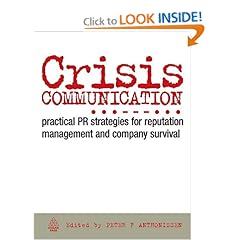
Book Review: Crisis Communications

FULL DISCLOSURE: I was provided with a complimentary copy of this book for review.

Although those of us in business don't necessarily like to think about it, having a PR strategy for crisis situations is becoming more and more necessary. Instead of a single author, this book pulls together 20 authors, all senior crisis communication consultants from IPREX, which is a worldwide network of international public relations agency (I had never heard of it before reading this book). By leveraging the presumably best consultants in each of the individual crisis areas, the book is a great reference tool for anyone in business.

I initially figured that the book would focus on large crisis situations, but there is useful advice on how to handle topics such as reorganization and restructuring, fraud, and negative press. Although I was expecting it to be more traditionally focused, the book spends a good amount of time exploring strategies around using the web as a PR vehicle and the new rules, risks, and rewards around it. Most of the chapters include real life examples and/or case studies that really bring home the points for each topic and I'm a big fan of that style of writing in business books. Furthermore, there are a large amount of templates that range from strategic planning tools, actionable checklists, and sample press release copy (the press release copy samples are extremely useful as opposed to Googling for samples that you hope are well-written).

Certainly worth having a copy on your shelf even if you don't read it cover-to-cover even if you, like me, hope you'll never need it.

Too bad it's not available yet in a Kindle edition.

Link

Book Review: The Tax Lady's Guide to Beating the IRS

FULL DISCLOSURE: I was provided a complimentary copy of this book for review.

I didn't actually think that I was going to like this book as I have a very good CPA that I trust, but then I decided to read it from the perspective of someone that files their own taxes. Once I got into that frame of mind, I found this book to be extremely well-written with lots of tips that ordinary people could leverage for personal tax savings. I especially liked the detail in which the author, Robin Lynn Deutch, went into with regard to using investment vehicles such as IRAs and 401(k)s to realize large tax savings -- these are the double whammies of not only saving on taxes, but investing in your future.

The book flows well and has action steps , "Fast Facts", and "Tax Tips" clearly called out throughout the chapters, which can allow you to get through the material very quickly. There are good explanations of IRS procedures and good tips about what do and what not to do when filing your returns.

At the end of reading it, I found that it reinforced the fact that I have a great CPA as there wasn't anything in the book that we hadn't discussed; you may wish to pick up a copy just to judge the value of your CPA. Furthermore, if you file your own taxes and are looking to evaluate your options and overall tax strategy, I have not read a more easy-to-digest book on the subject.

Note that this book appears to be updated yearly as there tend to be minor and potentially major changes to tax codes that affect individuals on a yearly basis.

Link

Saturday, April 04, 2009

Lessons for tough times

From the Businessworld interview with Shumeet Banerjl, CEO of Booz and Company come some excellent lessons.

With regard to being better equipped for recessionary times:
There are two most important lessons that a company should learn. One is that debt is a good thing, but you have got to watch capital structure where you have debt deployed for acquisitions. The second lesson . . is that chasing valuation is a bad basis to build companies. If you build fundamentally strong companies, you get good valuations, but it doesn’t work the other way round. Good companies pay attention to ensure that they achieve an adequate balance between top line investment and operating costs.

What companies can do instead of just cutting costs:
. . . there are tremendous opportunities that will emerge in this situation. And in order to make that happen we take two or three ingredients. One is industry structure and dynamics. What do you think will be the shape of the industry in two years from now? You don’t have to be right, you have to be more or less accurate. Second, what role are we as a company going to play in that structure? What is the shape of assets we would like to own? What kind of capabilities do we need, and where will we get them from? And third, that cash is king has never been truer. Do we have the balance sheet strength and the capital sources to ensure that we can move fast when opportunities emerge? We have seen again in the course of the past few months that opportunities have risen dramatically and very, very fast. And being in a position to act on those is very important.
Good interview.

Link

Gmail web interface and Twitter user?


You should check out TwitterGadget -- it embeds a fully functional Twitter client within the Gmail web interface.

TwitterGadget can also be used in iGoogle or by itself, but follow these instructions (5 steps) to embed it in Gmail.

Link

SkipScreen

The functionality of SkipScreen is cool (it lets you skip past all the silly screens that RapidHost and others throw up before letting you download), but their logo is cooler -- look at the words below the large letters:


Link

Tuesday, March 31, 2009

I've done a 180 and I'm back to the iPhone

For those of you that are smacking your foreheads in disgust after reading why I switched to the Bold, please give me a second to explain:

I was recently on an unplanned-for trip that was booked at the last minute and various things throughout the course of the trip made me realize that the Bold is not a suitable substitute for the functionality of the iPhone; I do still have some of the same gripes with the iPhone (battery, keyboard, reception, etc.), but I was unaware of how much it affected my day until I didn't have it.

Here's what brought me back:
  • Applications. I use them. A lot more than I thought. BlackBerry doesn't have them and the mobile versions of the sites for which I have iPhone applications don't measure up. Even something as simple as the weather application on the iPhone blows away the same push-based functionality on the Bold. Hey, I'm also pretty excited about the Kindle application too as that makes my whole investment in that series of products and distribution model more useful.
  • Browser. I never had a good idea of how much I used the browser until I had one that didn't work as well or as easily. iPhone = real web browsing; Bold with Opera doesn't.
  • Gmail. The Gmail app for the BlackBerry sucks in comparison to the e-mail experience via Safari on the iPhone -- not RIM's fault, but I use it an awful lot and the experience is much better on the Bold. And, for those of you that may point out that I could have my Gmail come to my Inbox on the Bold, I separate my work and personal e-mail by using separate applications.
  • Google Tasks. Works on the iPhone and not on the Bold, and I'm addicted to using it, it's part of my daily work-flow, etc.
  • Camera and pictures. Never really noticed how much I use the camera on the iPhone and picture manipulation until I couldn't do it in the same way -- interacting with pictures on the iPhone leaves the Bold in the dust.
  • Cords. One cable to charge my music device and phone. I don't know about you, but reducing cables and chargers and other device-specific crap is important to me when traveling.
To address some of the outstanding problems, I've made the following moves:
  • Reception. Can't do much about it, so I'm going to live with it and hope that Apple releases software updates to address it and that AT&T continues to improve their backbone. Note that I saw very similar signal coverage in San Antonio (home of AT&T), but still experience issues in Denver.
  • Keyboard. I'm getting very fast at inputting via Shapewriter; my biggest problem is wrapping my brain around the process of invoking Shapewriter before I initiate or respond to an e-mail. I know people that hate Shapewriter, but it totally makes sense to my brain and has drastically increased my input speed for lengthier e-mails.
  • Battery. I've invested in the Richard Solo battery, which I can't imagine having attached to my phone when using it for a voice conversation, but everyone that I've talked to has said that it's been an amazing device for them while traveling.
I'm done switching for now unless one of the new Nokias really catches my eye and/or the new iPhone this summer is super-cool (I'm sure it will be). And, yes, I'm eagerly awaiting a lot of the functionality from the iPhone 3.0 software suite.

The definition of "rocket science"

This video is way too funny:

How many rocket scientists do you deal with on a daily basis? I think I'm going to get the quote framed on my wall.

Thanks to John Sparks for the tip.

Link (if the embed isn't working for you)

Sunday, March 29, 2009

XM/Sirius

I've said all kinds of things about satellite radio over the years, so I won't rehash them now. Here's what I think:
ClearChannel went back private a few years ago and traditional radio is not necessarily doing very well. Although none of us are able to look at ClearChannel's cash position any longer with them having gone private, I would be willing to be that they have a warchest. I'm guessing that they're looking hard at purchasing the combined XM/Sirius entity, especially at a discount price -- I almost wonder if the bankruptcy was a takeover protection effort.
Just my $0.02, but it seems like radio has a strong history of simple consolidating stations and channels to maintain advertising revenue instead of directly addressing the problem -- XM/Sirius, at its core, is just another set of stations and channels; it's just delivered via a different medium.

Tom Peters shares his strategies for the recession

Read carefully.

Link

Verizon Math

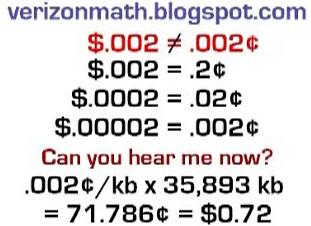
I don't remember the source of this, but I originally came across this audio recording of a guy's frustrating conversation with a Verizon customer service rep regarding the difference between 0.002 dollars and 0.002 cents (there's a hundredfold difference for those of you without calculators as there are 100 cents in 1 dollar). You can listen to the audio recording here, though it may want to make you drop Verizon if you're a current customer. After a little Googling (a very little, by the way), I found the blog dedicated to this silly stuff -- you can read it here at Verizon Math.

Aside from the actual content, which, by the way is appalling (yet funny), think about this: 10 years ago none of this could have happened. It would have been expensive to get the gear to record the call at a high quality level, it would have been very expensive and slow to digitize the audio, it would have been insanely slow to upload the recording, most people would have been unable to even find the recording because of a lack of broadband penetration and inefficiency of the webscape, and even if they had found it, it would have taken forever to download and could not have been easily shared.

Dell has a team of people that now respond to things like this and it's not hard to respond -- search engines and blog-specific searches make the job infinitely easier. The problem for big companies is that if they do not address items like this early, then they wind up with exactly what Verizon Math is: a perpetual bad experience story with high Google rankings that will always show up in search results because people find it and bloggers like me continue to link to it.

Are you watching after your online reputation?

Thursday, March 26, 2009

Now you can get Taser'd from more than 80 feet away


Sure looks non-lethal to me.

Link

NIN|JA


You can download an exclusive EP from Nine Inch Nails and Jane's Addiction in support of their summer tour: just give them your e-mail address and they'll send you a download link. There are lots of formats available, including FLAC and Apple Lossless, and all of the links are torrents, so you'll need a torrent program to process the download.

Link

Friday, March 13, 2009

What if you actually let your customers decide what to pay you?

Matt Homann from LexThink has what he terms a "You Decide Invoice" that he uses for all of this consulting work. Here's the relevant language:
YOU DECIDE: Your absolute satisfaction with LexThink isn’t just our goal, it’s the measure of our worth -- and the determination of our fee. The rules are simple: you pay us what you feel we were worth to you. You decide, no questions asked. The only rule? We want to know why you paid what you did, and how we could have done better.
For those of you that rightly worry about payment, here's how he deals with that:
WHEN TO PAY: While we leave our fee in your hands, we can’t leave it there forever. Please send us your payment and feedback within 21 days after you get this invoice. Please send a copy of this along with your feedback and your payment. Thank you for your business.
Check out Matt's post for an image of his invoice template along with other useful information about his process, including the solicitation of feedback from his clients.

Link

The granson of Ansle Adams is helping us enjoy Ansel Adams print reproductions


Scoble has a video about the grandson of Ansel Adams, Matthew Adams, making nearly indistinguishable copies of Ansel Adams prints from the original prints, not from the negatives. I'm a big fan of Ansel Adams, so this is pretty exciting news to me considering the fact that there are a finite number of original prints and they are very much outside my price range.

Check out the video and listen to how they do it: Link

This guy build a 747 flight simulator in his warehouse for under $200K

The real ones cost $40mil and apparently his is pretty close.

Now this simulator took 10 years to build and a lot of the parts were donated to the builder in exchange for work, but it's still pretty impressive.


Certainly makes you think about what is possible given the time and effort.

Link

After the standard 15-20 month wait, GrandCentral is becoming Google Voice

After a 20+ month wait since the acquisition of GrandCentral by Google, the "phone number for life" service is relaunching as Google Voice. As an early user of GrandCentral, I am very glad to see that Google Voice is adding in many of the features that have been missing from the GrandCentral service, namely:
  • Text message forwarding. The Google Voice number will now forward text messages to your mobile device and it appears that you can respond to the messages via the Google Voice number or direct from your mobile phone.
  • Phone calls via the web or your mobile/landline. Some of these features have been a part of GrandCentral for a while, so it will be interesting to see if there is an additional feature set.
  • Free transcriptions using the GOOG-411 engine. Due to the fact that I currently pay for PhoneTag, I will be very interested in the accuracy of this service. You can read a reaction to this announcement made by James Simnoff of PhoneTage this morning -- in short he says that he looks forward to being able to say that his product is better than Google's; I wonder if Google's will simply be good enough to cause people like me to stop paying for transcription through third parties.
  • Easy conference calling. Simply have the people you want to conference with call your GrandCentral number, and add up to 5 of them to the call using the keypad interface.
  • Free calls to the US and aggressive international rates. I don't have the international rate chart, but assuming that you can easily make web-based calls using the service, this could be useful.
Current GrandCentral users have to wait for the upgrade notice to show up in their Inbox (mine currently tells me that I am ineligible for an upgrade). There are some things that I'm hoping for that have not yet been confirmed:
  • Google Voice shares my Contacts from Gmail to resolve callerID and provide a single contact database.
  • Google Voice messages automatically show up in my Gmail account. Lifehacker reports that the "voicemail" label is now reserved by the system in Gmail, so it seems there's a pretty good chance that this will happen.
  • Ability to initiate web-based calls directly from the Gmail interface.
Google Voice is currently only available to existing Grand Central users and to people upon whom Google bestows invitations -- if I get some invites, I will certainly let you know.

Link

Wednesday, March 11, 2009

The Obama watches are in

Shameless plug because I'm the one selling them:

ObamaWatchShop

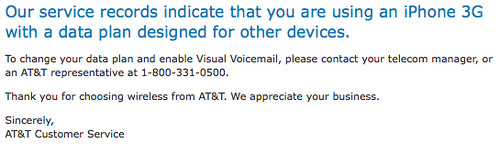
AT&T nastygram: no iPhone for you on a non-iPhone data plan

Posted yesterday about moving my SIM into my iPhone and having no problem with with data service, right?

Here's the nastygram I got via e-mail from AT&T today:


Oh well, worth a try I suppose.

I guess I'm more apt to want to sell my iPhone now, so anyone want an unbricked iPhone?

Tuesday, March 10, 2009

The switch from iPhone to Bold

I've really tried to like the iPhone and for the most part, it's lived up to many of my expectations. However, there are a few things that make it hard to use for business:
  • Battery life. On a normal-use day for me (probably a heavy-use day for most people), I wind up recharging the battery at least once during the day and have to charge it overnight.
  • Signal. There still seem to be some signal issues with 3G service; I can stand right next to a co-worker using an original model Samsung BlackJack and he has full bars on 3G while I'm on a couple of bars with EDGE.
  • Keyboard. I've gotten pretty good at using the iPhone keyboard, but it still is limiting when compared to a real QWERTY keyboard (yes, I've tried the Storm with the haptic and although it's marginally faster, it's not really as good either).
I picked up a Bold last week and immediately took it with me on a business trip. Things that I like:
  • Contacts & calendars. I simply set up Google Sync and all of the information from my contacts and calendars downloaded to the phone and everything syncs in real-time. While I had configured this on the iPhone, Google Sync on the Bold automagically happens by simply downloading the app and entering in your account information.
  • QWERTY keyboard. I can fire off e-mails about 3 times faster than I could with the iPhone.
  • River of messages. Having everything -- e-mails, MMS, and SMS -- come into a unified inbox greatly improves my workflow. I've gone from being a minimal texter to a heavy texter as I use texting as a filter for importance.
  • Battery life. I'm only recharging it every other day under my normal use conditions.
  • Signal. Unbelievably good in areas where the iPhone wouldn't even have coverage. There's no option to shut off 3G, but the only reason I ever considered doing that on the iPhone was to conserve battery, which doesn't seem to be an issue with the Bold.
  • Call quality. People on the receiving end have commented on the voice quality, so it must be noticeably different (I didn't call myself from my iPhone and I haven't called myself from the Bold, so I really would know).
What I don't like about the Bold:
  • User interface. Apple and the iPhone blow everyone out of the water with this on every Apple device that I've used; nobody even comes close.
  • Applications. The BlackBerry's handling of applications is kludgy at best and there just aren't that many real applications yet. I miss a lot of the applications that I use to use on a daily basis, including applications as simple as the iPhone Weather application. I'll see what happens when the BlackBerry app store opens.
  • Media handling. Totally sucks compared to the iPhone -- I'm not sure anything handles music, pictures, and videos as well as the iPhone (except a Mac, of course). It does such a poor job that I travel with an iPod Touch to take care of these items.
  • Screen size. This is a total opportunity cost -- in return for getting a real QWERTY keyboard, I lose half the screen real estate that I had on the iPhone.
  • Rich e-mail handling. For the most part, the iPhone rendered e-mails on its screen the same way a desktop e-mail application does; the new BlackBerry OS does an ok job, but not great. Further, since I access my personal Gmail from the Gmail BlackBerry app (I accessed it via a Safari shortcut on the iPhone), there is not support for rich/HTML e-mails, which sucks.
Overall I think I'm happier with the Bold from a getting things done perspective, but there are definitely times when I miss the iPhone. Interestingly, the AT&T folks told me I couldn't move back and forth with my SIM, but I popped it into my iPhone today just to check and had no problems whatsoever (note that I don't use VisualVoicemail, but I'm guessing that would not have worked) -- I was able to make and receive calls, send and receive SMS messages, and access the internet. I'm guessing that my iPhone is completely unbricked, which means that I could probably sell it for a fortune, I'm just not sure that I want to at this point with the knowledge that I can bounce back and forth. I suppose if any of you wanted to make me an offer for it, I would consider it, but I'm not necessarily in active sales mode right now.

Monday, March 09, 2009

Anybody notice how the Amazon Kindle app for the iPhone doesn't include newspapers and magazine subscriptions?

I did.

Interesting stuff considering that Sprint charges Amazon to use their network for "WhisperNet".

Chinese real estate speculation in the US

Lots of news stories about how tours are being organized for cash-flush Chinese citizens to tour America and buy properties that are distressed, in foreclosure, etc. Many of the news stories, especially those on television focus on Americans being interviewed, expressing outrage and concern over the potential of the Chinese owning tracts of property in the United States (I have yet to see any reporter remind anyone being interviewed how much of the US debt is already owned by the Chinese).

Reminds me of the 80's and the concerns about the Japanese being large tracts of US property, which, in turn, reminds me of this quote from Akio Morita, founder of the Sony Corporation:
"If you don't want Japan to buy it, don't sell it."
There you go -- feel free to update accordingly with the country of your choice.

Picture from b2tse

Friday, February 27, 2009

The accelerating death of newspapers

I returned home to Colorado last night to hear that the Rocky Mountain News was publishing their final edition today -- some of the employees were absorbed into the Denver Post and most others were simply laid off. In watching some of the television coverage there seemed to be varying degrees of shock among employees and older subscribers; there did not seem to be any shock among younger people interviewed.

Early this morning I saw a story about how the San Francisco Chronicle may have to shut down because it is hemorrhaging money. In San Francisco, unlike in Denver, there is only the Chronicle, so a closure of the Chronicle means that the daily newspaper goes away.

This morning I saw an announcement Hearst Corporation is going to launch its own e-reader for the distribution of magazines and newspapers. Interesting timing to be sure, although probably fairly coincidental as it relates to the Rocky Mountain News, though Hearst is the parent corporation of the San Francisco Chronicle, so perhaps not so coincidental at all.

I attended a conference last week at which there was a panel of persons representing various media outlets, including newspapers. The newspaper representatives at the conference said that they were exploring strategies including a more heavily scaled focus on their website, the ability for citizens to post blogs and/or articles on the main newspaper site, and printing micro, tightly regionalized papers that included articles written by people living within those regional areas (i.e., non-professional writers).

A few weeks ago I was explaining to a good friend that I consume my news via the reading of blogs and that although I saw most of the same news that he did, I reached the news outlets by different ways (if I ever even reached them at all). Generally by consuming news through blogs, I get 2 or more opinions of a news story and don't necessarily need to see the (supposedly) unbiased reporting from a news outlet.

It's my opinion that news companies are confusing their vector (print vs. e-reader) with an underlying issue of a fundamental shift in the way that their content is consumed. Hearst is trying to create a device that allows for dynamic advertising while still providing the same content -- could you imagine the amount of ads in a Cosmopolitan magazine (Hearst owns it and I'm secure enough to admit I've looked through one) on a single page e-book reader with no color? Just the thought of that is extraordinarily painful. However, I suppose that if you are one of those consumers that is used to holding the newspaper artifact in your hand as part of the ritual of reading and newspapers are severely cutting or eliminating printing, then perhaps Hearst has exactly what you need.

What do you think?

Picture from Jon B. Swerens

Monday, February 23, 2009

Kindle 2

This is going to piss some people off, but I ordered my Amazon Kindle 2 this past Saturday night (2 days ago) around 11PM and got the shipping notification early this morning, which means that I should receive it on the 25th (unless they upgrade to overnight like they did with my original Kindle).

Stay tuned for reviews.

Click here if you want to buy one.

Monday, February 09, 2009

Google Sync just got really useful

Google Sync now offers calendar and contact sync using the Microsoft ActiveSync protocol. Although the Google Sync application for BlackBerry has been around for a while, Google Sync over ActiveSync opens up 2-way syncing for other phones supporting that protocol, namely Windows Mobile devices and Apple iPhones. Previously if you wanted some amount of sync on your iPhone with Google, you had to use a product like NuevaSync, which only provided one-way calendar sync and gave a third party access to your Google account.

A few notes of caution:
  • Contacts from OS X Address Book and Outlook don't always import into Google perfectly -- I have experienced problems with imports of names, companies, titles, and phone numbers.
  • Read the list of known issues here.
  • Follow the instructions to back up your data.
Just cross your fingers that Google will enable PushIMAP for its mail services -- we know they support it on the phone for Yahoo. If you combined PushIMAP with the sync services described above, you'd have a free platform that would challenge BlackBerry core functionality. Take it a step further and imagine administrative controls for all this in Google Apps.

Link (this links to the iPhone page because that's what I use)

The Four Agreements

One of my good friends and someone I respect very much professionally recommended that I read The Four Agreements by Don Miguel Ruiz. What was amazing to me is that my friend was able to recite the four actual agreements in the book from memory and to explain each of them to me while we were sitting at lunch. Although it almost felt as if I did not need to read the book after his explanations, I decided to purchase a copy and read it for myself (unfortunately it is not available on the Kindle).

I now find myself in the same position to be able to recite the four agreements from memory and to provide explanation, so here it goes:

Always be impeccable with your word. Ruiz defines "impeccable" through its Latin roots, meaning "without sin." With that definition, it's easy to see how Ruiz suggests not to gossip or tell lies; most importantly he encourages you not to lie to yourself. The idea is to use your words for truth and to say only what you mean.

Don't take anything personally. What other people do and say to you have nothing to do with you, rather it has to do with issues that other people have. If you don't take words or actions from other people personally, then you make yourself immune to those words and actions.

Don't make assumptions. Instead of assuming things, simply ask questions to make sure that you fully understand; make yourself as clear as possible in all situations so that others do not have to make assumptions about what you really want. Removing assumptions removes drama, mistrust, and misunderstandings.

Always do your best. Even though circumstances may vary at any given time, simply do your best every time.

Typically I only recommend business-focused books and, while the information in this book is applicable to business, this book is much more of a book focused on life change. Note that you may be turned off by the first chapter of the book, which attempts to give some background on the Toltec religion and set the premise -- you can skip the first chapter, but some of the Toltec words used throughout the rest of the book will not make sense to you. Further note that you can completely skip the chapters following the fourth agreement as they deal completely with the spiritual and even include lengthy prayers. The meat and potatoes of the book are the four actual agreement chapters and you can likely finish reading them in less than 20 minutes.

Thanks to Dolf Berle for the recommendation.

Link -- Amazon

Wednesday, February 04, 2009

Google Latitude

Google Latitude lets you share your location information with people in your Gmail contacts -- you can leverage the power of the GPS chip in your phone along with Google Maps to see where your friends are.

Before I get too far into this: I always used to use the example of Asia being so far ahead of us in cellular technology with the example of location-based buddy proximity because I had seen an example of it 3 years ago on the internet. My starting point was to tell people to imagine that they had a lunch appointment and they had received permission from the person that they were having lunch with to see that person's location. If you know exactly where that person is, then you don't need a call or text if they are running late, if they are right outside, if they are circling looking for a parking place, etc. because you can see what's happening. Inevitably they would ask we we don't have the phones and I would explain that it's a network problem: Asia has a single network standard, which makes it easy to upgrade and even easier to adopt higher speed protocols. The uniform network standard enables the phone manufacturers to focus on development of the device functionality as opposed to network operation. Then that functionality allows the software developers to develop cool uses for the functionality.
Ok, so now I have to get a new example of how Asian networks are insanely ahead of us, but back to Latitude.

I would love to tell you that I've already used Latitude and that it is awesome and great and is already changing my life, but unfortunately it's not available for the iPhone. Presumably it will be available only when Apple releases the next iPhone firmware update as I further presume that there needs to be an upgrade to the core Google Maps application on the iPhone.

For those of you that can use it (Nokia, BlackBerry, WinMo), Latitude seems like the must-download application of the day.

Link

Tuesday, February 03, 2009

My rant on luxury hotels

I've got a few problems with luxury hotels. You know, the ones that are in that $200+ per night range? I feel like they're missing a few things in their business model, so here are my open suggestions to hotel operators:
  • Valet parking should not be $20-$40 per night. I understand that you likely have to outsource your valet operation for liability reasons, but you've got to figure out how to get that into the price of the room. One of the worst first impressions is to drive up to a hotel and have the valet remind you that it's $30 per night to park; before I've even walked in your door and checked in, I've already been dinged with a pretty hefty charge. Believe me, if it were between a room at $220 per night with no valet or $250 per night that included valet, I would choose the latter because the experience would feel better. (P.S. -- if I'm paying $20+ per night for valet, the valet should not change my radio station or move the position of my seat)
  • High-speed internet should not cost anything. After the initial infrastructure investment in some wired and/or wireless equipment, there really isn't too much of a recurring cost as you probably are going to have a high-speed connection at a monthly cost coming into the hotel regardless of whether or not any of your guests use it. If you have to recoup some sort of cost per room night, build it into the cost so that I don't sit down after I've checked in and feel like I'm getting dinged again: remember that at this point I've gotten hit by the valet for $30 per night for my car, I've signed off on the room rate with all of the additional taxes, and now I'm getting hit for another $10 per day for internet. Again, if I were choosing between the $220 per night and the $260 per night, but the $260 now includes internet and valet, I'm not going to quibble. (P.S. -- some of you provide bandwidth-throttled connections for free and higher speed connection at a premium; this strategy is good provided that you aren't throttling the bandwidth to below dial up speeds)
  • Workout facilities should be free. I've not stayed anywhere, including the very high-end chains, that have workout facilities that are worthy of a $10 charge -- it costs $8-$10 to go work out for a day at Spectrum, 24 Hour Fitness, or Bally's and none of you have those sorts of facilities at your hotel properties. In fact, your equipment is usually out of date and there is usually not enough of it. Unless you have an absolutely huge, state-of-the-art workout facility, it needs to be part of the base rate and even if you have a great facility, it should be part of the base rate. Some of the mid-tier hotel chains have figured out how to put in great facilities in small spaces, have state-of-the-art equipment, and not charge anything to use the facilities, so you need to as well. (P.S. -- lemon water and refrigerated towels are great, but please make sure you have regular towels and plain water available as well)
  • Small amenities make a big difference. Why don't you provide me with mouthwash and q-tips? The Holiday Inn Express that I recently stayed in provided me with mouthwash, q-tips, and cotton balls -- if they can figure it out, you can too. Also, if you spend a gazillion dollars making a really nice, marble-covered bathroom, do not give me small bath towels that I can barely get around my waist. Again, if Holiday Inn Express can figure out how to get me a soft, over-sized bath towel, you can too. (P.S. -- if the maid moves all my stuff on the counter of the bathroom to clean the counter, putting it all back on top of a washcloth instead of pushing it all into a corner is a nice touch)
  • Water conservation should not be a joke. You put the signs out about water conservation and I see the signs; I follow the instructions, and I still get all of my towels replaced. Unfortunately the water conservation ideas are at odds with the overwhelming luxury service that you want to provide -- you have to figure out how to balance it and get your staff on board with supporting the program. If the whole program is a joke, then maybe you should just get rid of the signs and support the environment by not printing them.
  • Be careful with your ancillary F&B revenue streams. I do expect to pay more for a beer at your hotel bar than Joe's Bar down the street -- $8 for a bottle of Coors Light is pretty expensive and $14 for a vodka and soda with well vodka that's measured in a shot pourer is really expensive. Yes, I also expect to pay more for food than at Joe's Bar down the street -- $18 for a cheeseburger is pretty expensive; there's only one place that I've ever been that has a cheeseburger worth the $18 price tag they slap on it. There's a certain amount of tolerance that we as your guests have for slightly elevated prices, but if you push too far, it forces me to leave your property to either spend less money elsewhere or to find a store and bring some items back with me. (P.S. -- I love Fiji water, it's my favorite bottled water, but $9 for a large bottle of it makes it worth my time to go buy 6 bottles of it for $9 at the gas station down the street)
Maybe I'm overthinking all of this, but as people look hard these days at what they're spending their money on, they want to feel like they are getting a good value, even at a luxury hotel. A hotel guy might look at everything I wrote and tell me that I don't understand, that there's competition, that there's Hotels.com; that they need to have the lowest possible room rate and that they really have to make all of their money from the ancillary streams. They would be wrong with regard to my understanding, I was in performance venue management for years and get the whole idea of ancillary-based economics. Here's the thing: we would put a facility fee in the ticket price of a concert and people rarely had an issue with it, but if we had tried to charge everyone entering the facility those few dollars at the door, no one ever would have paid it.

It's worth thinking about.

Image from dbking

Sunday, February 01, 2009

And the SuperBowl ads already start leaking

Transformers


Link (visit YouTube and watch it in HD)

GI Joe

Link (visit YouTube and watch it in HD)

At this rate, you'll be able to skip the game entirely if football isn't your thing.

Saturday, January 31, 2009

Conference week -- light blogging

I've been an at conference in LA since last Tuesday and role into a conference in Palm Springs that goes into next Thursday.  Sorry for the light blogging, but I promise I've got some good stuff stored up.

Tuesday, January 27, 2009

Failure

“Go ahead and fail. But fail with wit, fail with grace, fail with style. A mediocre failure is as insufferable as a mediocre success. Embrace failure. Seek it out. Learn to love it.”
-- author Tom Robbins (from: Tom Peters, The Tom Peters Seminar)

Watch this video for further inspiration:


Link

Thursday, January 22, 2009

Someone heard my rant about review copies

I haven't had a chance to review it, but Catherine Wilson read my rant about review copies of books not be distributed in e-book (i.e., Kindle-compatible) format and e-mailed me a copy of her book, When Women Were Warriors. Not only did she send me the e-book, but she actually encouraged me to e-mail it around to other people. Further, the book she sent is listed for only $0.99 in the Kindle Store, which is a pretty cool marketing technique considering it's the first of a trilogy.

Note that Catherine is the author of the book; she didn't have to hire anyone to do any marketing for her, she just sent me an e-mail. You can also read the first book in its entirety on her website, just click here.

It's just not that hard folks.

Obama's Chronograph Watch

President Obama was given a Jorg Gray chronograph watch by the Secret Service and has been seen wearing the watch frequently, especially when his sleeves are rolled up. The Secret Service version of the watch is very hard to get and available only in the Secret Service Store, which is not publicly accessible. However, the watch is available as an imprintable item from folks that sell those sorts of things; the catch is that you have to buy at least 12 of them at around $180+ each.

Here's what I've done: I've gone ahead and made the purchase of some of the watches with no logo on them. -- they're the same as you see in the picture, but with no Secret Service Star, just a black face. Further, I've created a little site where you can buy the watch in single quantities from me directly. I'm charging $200.00 per watch plus reasonable shipping and handling charges. This is not really a money-making venture for me, I'm just a watch guy that was trying to figure out how to get one of these watches for myself and decided to help out anyone else that wanted to do the same.

This is a nice looking watch and fairly affordable. There are other sites out there that are charging in excess of $300.00 for these things and are putting in expected delivery horizon of 3-7 weeks (about the amount of time that it takes to get them printed, which means that they are taking your money and using it to fund the purchase prior to shipping the watch to you).

I should have the watches in-hand in a few days, so feel free to use the e-mail address on my site to get on the waiting list -- no deposit required.

If you're interested, please visit my site.

Obama Watch Shop

Friday, January 16, 2009

The sillyness of books for review

I get a fair number of books sent to me to review and post about on my blog -- easily 60% of them never get a review as I only review the ones that I enjoy and that I think that those of you that read my blog may enjoy as well. What's recently cracked me up about the process is that I will always add this line to my acceptance of a review copy: "Kindle-compatible electronic versions to review are always appreciated." Not one publisher or author has ever sent me an electronic copy for review.

There are so many things that are silly about not providing an electronic review copy:
  • No shipping cost -- send it to me via e-mail.
  • Easy direct quotations -- I can clip a page and copy the text directly on to my blog.
  • No production cost -- even the simple review copies printed on bound 8.5x11 paper that I receive have a cost to them.
  • Easily transportable for me -- I'm much more likely to review the book more quickly as I hate to carry my Kindle and a book; when I travel, only the Kindle comes with me, so no book reviews when I travel.
  • It's green -- electronic versions have little to no real impact on the environment.
  • It makes it easy to sell the final version -- if you can figure out how to package it in the review stage to be read on the Kindle, you'll be that much closer to being able to sell the final version on the Kindle store when you release the final version.
Why not send electronic review copies? I would guess that the biggest issue might be a concern that the electronic version could show up on bittorrent sites. Sure, that could happen, but you either trust your reviewer or you don't -- have me sign something with a financial penalty if I'm caught (it would be really easy to simply change a paragraph in each digital copy to digitally "watermark" each digital version to the reviewers that it was distributed to). Further, there's not a real market or even a good mechanism for e-book file sharing; market penetration of the e-book devices just isn't here yet. Finally, even if I did decide to share the electronic version, if it's a good book, the people reading it are likely to recommend it and, again, most people don't have e-book readers, so that mechanism is likely to increase overall print sales -- it's not like there's anything keeping a reviewer from photocopying and/or otherwise passing around a printed review copy, even though I typically will not.

Food for thought if you're a publisher or a writer or a marketing company that rep's a publisher. I'd be willing to be that the first marketing company for a publisher that pushes this strategy will have a great story to pitch.

Picture from librarianmer

Wednesday, January 14, 2009

Mint prevents fraud

I use Mint as my financial account aggregator and got an e-mail from them regarding documented fraud from companies named "Adele" and "GFDL" -- these companies have been hitting customer accounts for relatively small amounts in the $0.10 to $0.25 range. Due to the fact that I give Mint access to aggregate my financial data, they specifically gave me an alert as they noticed that one of these companies had charged one of my accounts.

When I logged into Mint this morning, I searched for "Adele" and got no results, so I searched for "GFDL" and got a result of a $0.11 charge in November. Drilling into the detail, I saw that it had come through as a check card purchase, which means that my check card number had been compromised back in November. I immediately called my bank and they opened a fraud inquiry and canceled my check card with the promise of a new one in 10 days or less. Although it was a relatively small amount of money that was charged against my account, it is entirely possible that it was a test transaction to verify that they had my data correct and that they were potentially looking to steal more and larger funds in the future.

There are privacy advocates that warn against financial aggregator services such as Mint, but I've always been happy with the service and am now even more happy with the service after this experience -- my bank didn't catch it, my financial aggregator did. Furthermore, due to the nature of how Mint imports my data, I can easily search across all of my financial accounts as opposed to having to log into each account individually and attempt to search.

I highly recommend checking your own accounts for charges from these 2 companies (it's easy if you use Mint).

Tuesday, January 13, 2009

ctrl+option+return

That's the key combo that you need to insert a carriage return within a cell in Excel for OS X. (Excel 2004 & Excel 2008) Similar to the alt+enter function for Windows.

Friday, January 02, 2009

Thoughts for the New Year

I was going to make a whole list, but I think that this quote from Seth Godin sums everything up pretty well:

Your customers and employees and investors will remember how you treated them when times were tough, when they needed a break, when a little support meant everything.

No one in particular will remember how you acted during boom times.


Happy New Year

Picture from nigham

Thursday, December 18, 2008

Last minute gift ideas: watch (NOT Amazon Prime)

There's a great watch company in Denver called Serket Watches -- they make awesome automatic watches with mechanisms manufactured for Serket in Switzerland, and they are made in small, serial-numbered batches, so you're probably unlikely to bump into a large number of people that are wearing the same watch as you. As you can see in the picture, they come with a very distinctive leather band and, as cannot be seen in the picture, the back of the watch is transparent, allowing you to see the mechanisms and serial number.

Although the watches are well worth the original price, here's a coupon code that will get you $100 off through December 20: SHOPIFYE7BJ4K7T.

If you have someone that is a huge watch fan and/or collector, this will definitely make an interesting addition to their collection and express shipping for Christmas is an option.

Click to purchase

Last minute gift ideas: electronics

Some ideas for electronics:


iPod Touch 8GB (sure, there's a 16GB available too, but the 8GB keeps it under $250.00). This one also opens up opportunities for other people to just give the recipient iTunes Store gift cards (i.e., uncle Larry needs something at the last minute and he's standing in Safeway).


MacBook Air -- I love this thing and it's perfect for the Mac person in your life, especially if they do a bunch of traveling. Yup, it's expensive.


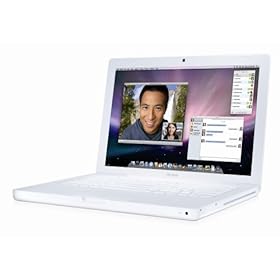
MacBook White -- spec'd the same as the Air, but under $1,000.00; not as sexy and cool, but still a nice gift.


Logitech QuickCam Pro -- small enough to take with you, good quality video. The video conferencing is free through AIM or Google or Skype -- what are you waiting for?


SmartParts Digital Picture Frame -- might as well put all those photos on display, right? This one doesn't have wireless, but it comes in right around $100.00, which you'll probably save in photo printing at Costco over the next year, right?


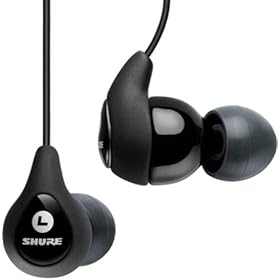
Shure SE110 Sound Isolating Headphones -- Shure designs in-ear monitors for musicians, so they know what they're doing. These headphones are awesome, great to travel with, and you'll be amazed how low you can keep the volume.

Monday, December 15, 2008

Last-minute gifts, a series

I almost started posting these without making you aware of my assumption: I assume that you have Amazon Prime. If you do not have Amazon Prime, you may consider buying it as a gift for you and your family (5 people in your family in addition to you, to be exact). Prime gives you free 2-day shipping on any item marked with the "Prime" symbol or overnight shipping for $3.99.

Just the thing for last-minute gifts and all the gifts I post in my series will be available via Amazon Prime to make sure that you can get them in time.

AmazonPrime

Last minute gift ideas: business books

First in the series: business books.


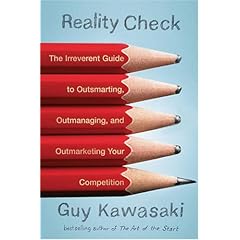
Reality Check by Guy Kawasaki


Triibes: We Need you to Lead us by Seth Godin


The 4-Hour Workweek by Timothy Ferris


Outliers by Malcolm Gladwell

Thursday, December 11, 2008

Slow blogging

I'm blogging from the San Antonio airport, using the free wifi that they provide, which is great. I've been traveling since Thanksgiving and finally conclude my travels on December 15, so I promise some more frequency starting that week.

Expect some last-minute recommendations from me for gift purchases, etc. on the 15th.